
Welcome, this is a group of students having a photo shoot with District Officials(Mr. Omoo Henry-senior planner, in black suit, Mrs. Florence Olet-Secretary,3rd right,back row and Mr. Olao Ronny-Population Officer ,2nd left, front row)from various universities who had completed their industrial training at planning unit. The smiles on their faces say it all.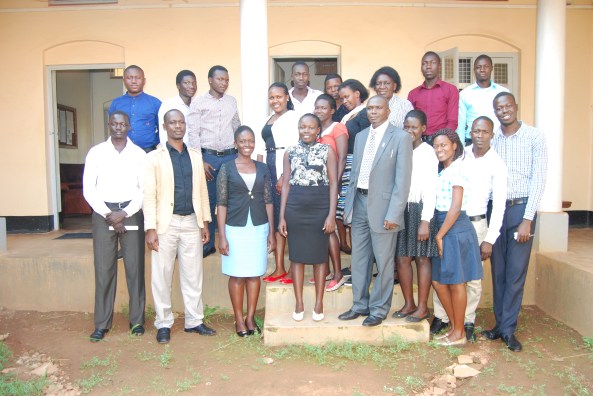
Category Uncategorized
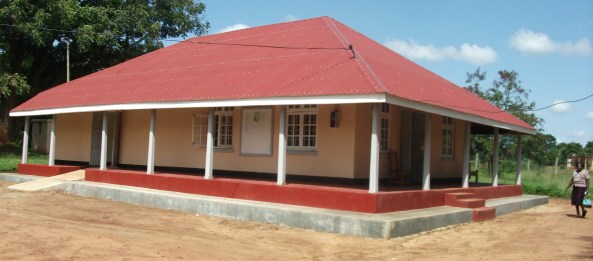
Community Based Services Department
Community based services department is mandated to foster the development of communities and to bridge the gaps between them through the delivery of government services by mobilizing, empowering and providing welfare services to the communities, community based groups, vulnerable and disadvantaged persons, particularly the women, children, persons with disabilities, the elderly and the youths to participate in community activities and to benefit from services of the department and other agencies of development in order to achieve gender equity and meaningful socio-cultural and economic development.
Services in the department are therefore provided under the following sections:
-Department Head concern with general administration & NGO/CBO registration
-Community Development (FAL Programme, Rehabilitation, disabilities and elderly; Gender and Culture)
-Probation and youth
-Labour and industrial relations
The department is inadequately staffed, position for the head of department and Community Development officers in three newly created sub-counties are vacant.
Through its nature, the various sub-sectors of the department work hand in hand with the other departments. Community Development is heavily involved in organising and mobilising people when improving and maintaining community roads. The community development sub-sector is also fully involved in the NAADS programme of the Department of Production and Marketing. The sectors Probation and Welfare and Rehabilitation work closely together with the Department of Education and Sports in (re) integrating juveniles and disabled in the mainstream of life and thus education. Labour endeavours to attain secure and sustainable livelihood through freely chosen productive employment and work for both men and women.
The Department of Community Based Services is regularly involved in mobilising and training the local people on sound health practices. Previously, the department was also involved in mobilising for the sub-sector water, but since last year this sub-sector has its own mobilizes. Various departments (crops, health and water) have inputs in the FAL programme.
The department continuously produce plan originating from the community with element of socio-economic factors included which has used a bottom up and participatory approach in planning right from the sub counties (ACDOs) level to the District level. Using harmonized participatory planning guide (HPPG) of 2006. DUPAG has introduced the following concept:-
PEST
This stands for Politic, Economy, Social and the Technology needed/used in the department. Their analysis is presented as follows:-
Political
Politicians are very instrumental in this department. They are the planning authority as it is provided in article 36 (1) of the Local Government Act of 1997 and as amended in 2001. In the department, the sect oral committees formulate policies upon which planning hinges and there after are fine-tuned by the district council policies. The technical organ of the planning authority in the department is the staff spear headed by the head of department and heads of sections and other subordinate staffs are members.
Economy
The priority in this department is the maximum utilization of the available resources. The idea here is the realization of the potentials of the disadvantage groups in the community taking into consideration the value for money spent in each activity carried out by the implementers. This can be confirmed in the budget allocation to each sector depending on the agency and magnitude of the programmes which each sector has.
Despite of little resource allocation, the priority areas (PEAP) are cratered for, in this department. For example child protection, gender issues, disability and elderly, women and youth, monitoring and re-tooling with their impact talking for themselves.
Social issues:
Both staff and the sectoral committee members in the department have one common interest that is “Unity and prosperity for all”. Out of this, there is a unique character exhibited by everyone in this department, staff are polite, approachable at anytime loyal to their colleagues and have respect for one another and each person is concerned about the other colleagues. Responsibilities are shared in all fronts in the fulfilment of the common interest.
Technology
With the current technology in place to simplify work, the use of modern office equipment is highly used in the department especially in net working, co-ordination and communication. This has reaffirmed the notion of the information society in the department where information are received, manipulated, analysed decode, stored and disseminated using the available information systems in place
Physical planning
The boundary for the department since its establishment is not known. The entire area has disability, community services, and the police and land board. It is very important for this site to be surveyed and leased.
Energy Issues
As the engine and ability to accomplish tasks, the department plays a Central role in providing the software package in the appropriate access, use and the conservation of available energy sources in the district. The sources included are:- electricity, solar biomass, wood fuel. Due to changes in the needs of various energy sources, the department’s priority is to mobilise and sensitize the community about the need to conserve the energy sources in place. Each section in this department has included its concern on how to work on the energy issue with the population it serves.
Equipments used include:
• Computers in which each staff has a computer to easy his/her report writing data storage and learning experience in computer world.
• Use of internet services
• Use of phone set
• Use of photocopier to multiply the documents
• Use of electricity power to run the office equipment in place

Lands
The core function of the Sector is to increase Land right awareness and ensure security of tenure for the Majority poor, especially the most vulnerable like women, orphans and person with disability.
Goal
Ensuring Sustainable Land use, Land Tenure Security, Affordable, Decent Housing and Organized Urban Development, by creating an enabling environment to use land resources sustainably for better living conditions in rural and urban Uganda
Policy issues
-Improve the livelihood of the very poor people by ensuring equitable access and ownership of land and ensuring greater security of tenure to the people.
-Improving access to justice – strengthening dispute resolution institutions; and increasing land right awareness; support to improve land right of women and other vulnerable people and legal aid support to the needy
-Maintain transparent, accountable and easily accessible institutions and systems for decentralised delivery of land services. This will be done by developing capacity of the land management institutions in the Lower Local Government
-Ensure the quality of rural and urban settlement and strengthen land use planning at all levels.
-Ensuring decent housing by regulating contraction of houses in accordance to the Physical plan.
Gender
In line with land sector strategic plan, this sector also encourages equitable access to and utilisation of land by all gender. This is mostly to be done by putting specific emphasis on land right of women and other vulnerable groups
The Sector is also aware that, Women make up just over half the population and often have different life styles and patterns of movement within rural growth centres from men. But women are underrepresented in the built environment professions and they have been poorly consulted about their views on how centres should be planned. As a result women frequently experience inconvenience and obstruction in the planned environments. Inadequate solutions are imposed on them and they encounter a widespread lack of knowledge and understanding among professionals about how they use space. Gender in physical planning is to work with both men and women to create and develop the types of communities and places that they want to live in.
Environment
Land management aims at sustainability since it aims at promoting optimal use of productive land in both urban and rural areas and protecting fragile ecosystem and environmentally vulnerable areas from negative impacts of urban planning. This is done through developing and supporting the implementation of improved land management practices like agriculture, industry, transport, urban development, green spaces, protected areas and other vital needs.
The land management sub sector aims at providing adequate and integrated environmental infrastructures in both rural and urban areas with the view of improving the quality of life.
Most land in the rural areas is not being appropriately planned and managed and the rural setting runs the risks of unplanned development if efforts are not put in place to address the problem. This poses a challenge to the sub-sector: since communities have just returned from IDPs and proper land management will be required to minimize environmental damage
Maintenance
Maintenance of rural growth centre is entirely the responsibility of the sub-counties. They mobilise the traders and developers within these centres to do the routine maintenance like cleaning up the centres, slashing and digging up the drainage channels.
SWOT Analysis
This is an analysis of the strengths, weakness, opportunities and threats in the urban/physical planning sub-sector.
Potentials
– Political will and support from political leadership
– Committed and respectable members of the District Land Board.
– Increase in land right awareness hence the increase in the desire for land right justice.
– Knowledgeable and highly qualified personnel to handle land matters in the department
– The communities have welcomed the idea of having organized settlements and appreciate the values
– Trained trading centre development committee at the rural growth centres
– Close link with the departments of physical planning under the Ministry of lands, Water and Environment
Opportunities
– Developments are beginning to appreciate the value of organized land uses
– There are new set policies that have been set up like land use policies and the land poly to streamline land management and administration.
– Civil Society Organisation are beginning to realise the importance of land in poverty reduction hence a paradigm shift to land based poverty reduction campaign.
Challenges
– Inadequate funding for the sub-sector
– Enforcement officers not in place to implement the Physical plan
– Recorders at Sub Counties have not been inducted to issue Certificate of Customary Ownership being the even thought it remains the cheapest paper prove of land ownership.
– Inadequate funding to members of the Area Land.
Constraints
– Wide spread poverty hence limited the level of land utilisation.
– The cost of processing land titles is prohibitively high for the average person in the district.
– Haphazard developments which proceeds planning
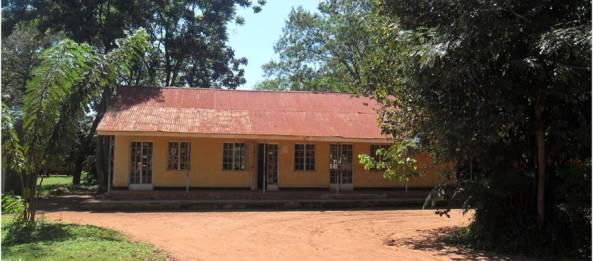
Natural Resource Department
The Natural Resources department is one of the departments in all Local Government in Uganda. It was created around 2002 and is headed by the District Natural Resource Officer and its main objectives of the department are:
-To promote and ensure sustainable natural resource use and management. The natural resources include land, water/wetlands, savannah woodland and plantation, and forest in specific reserves.
-To guide the utilization of all the natural resources in the district
The department is consisted of the following sub-sectors:
-Environment and Wetlands sub-sector
-Land Management Sector (Survey, physical planning, cartography, valuation, registration of titles)
-Forestry sub-sector
Gender
The role played by both men and women in the utilization and management of natural resources and their relationships cannot be under looked and it is central in the realization of sustainable use and management of all natural resources in the district. Women, youth and disabled persons are usually the most heavily affected by poor planning and utilization of all forms of natural resources. It is therefore important to include gender issues in planning and implementation process involving natural resources use and management.
HIV/AIDS
HIV/AIDS remains a critical disease in our society and there is need to protect ourselves from getting infected by the disease and in case already affected, we have to embrace the spirit of positive living to ensure that we remain healthy and do not infect others. The disease normally affects performance of every one of us either directly or indirectly and against this background, all planning for natural resources management must mainstream issues of HIV/AIDs for purposes of sustainability.
Civil Society Organization
CSO’s plays a critical role in mobilization and sensitization of communities about sustainable use and management of natural resources and this role is fundamental in ensuring sustainable use. Indigenous knowledge of natural resources use and management exists among communities but this need to be put into use in light of the existing challenges affecting natural resources endowment in different localities for purposes of conserving the resources for use by the present generation and the future and this critical role is played by CSO’s. The civil society organization also plays a crucial role of coordinating conservational efforts by partners to ensure that there is efficient use of resources and no duplication of services.
POCC Analysis
Potential
-The district is well endowed with land, wetlands, fertile soils and savannah woodlands.
-The district leadership is committed to developing and managing all its natural resources.
-There are staffs recruited to plan for and manage the Districts Natural Resources.
-Communities are willing to cooperate in the use and management of natural resources.
-Central government is willing to develop policies and give technical support for sustainable use and management of natural resources.
-Civil society organization is willing to work hand in hand with government, communities and all other stakeholders in the use and management of natural resources.
-The UN- Millennium development goal number seven focus solely on ensuring environmental sustainability.
Opportunities
-NGOs and CBOs are willing to embark on projects that will protect and ensure sustainable management of natural resources.
-Political leaders are committed to the development and management of natural resources because of the critical role natural resources play in fighting poverty.
-Government is willing to fund projects that integrate issues of environmental sustainability.
-The district council is committed to enacting Ordinances that will further sustainable natural resources use and conservation.
Challenges
-Ignorance about the importance and values of our natural resources by the local communities.
-Conflicting sectoral policies which negatively affects use and management of natural resources.
-Inadequate funds to initiate development projects which would enhance the quality of natural resources, by way of ecosystem restoration and Management to reduce poverty.
-At present, most NGOs, CBOs and government programmes are not geared towards protection of natural resources
Constraints
-Increase in population in urban areas has increased exploitation and demand for natural resources and associated products and services.
-The looming level of poverty has increased dependency on natural resources use leading to degradation and depletion of some of the natural resources stock.
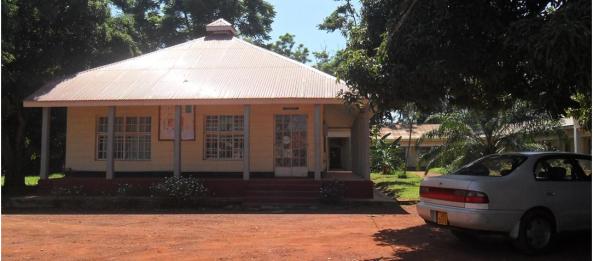
Production and Marketing
Production and Marketing Department is made up of six sectors; Crops, Livestock, entomology, Commercial, Fisheries and NAADS. The Staffing of the Department is very inadequate due to reduction of staff on creation of New Districts of Amolatar, Dokolo, Otuke and Alebtong, at the same time there has been a prolonged banned on staff recruitment pending restructuring of the Department.
The department is headed by District Production and Marketing Officer, assisted by heads of sectors. The approved structure provides for technical officers in the sectors (SMSs) in all the sectors except NAADS. However the district has not filled the positions of SMSs except in crops and livestock
At Sub County level, with the exception of Ngetta and Agali Sub Counties, all the rest have Sub County NAADS Coordinators and two Agricultural Service Providers (AASPS) for Crops and Livestocks employed on performance based renewable contracts of 3 and 2 years respectively. Besides we have frontline Extension Workers (FEW), five for crops and three for livestock in the field. The department therefore remains understaffed at Sub County level
The department has the following supportive staff at district level, Departmental Accountant, Office Attendant, departmental Secretary and a driver
NAADS has been rolled to cover all the 9 sub-counties in the district and 4 divisions of Lira Municipal Council, the District NAADS coordinator coordinates the programme at the district headquarters and the sub- county NAADS coordinators coordinate NAADS activities at the sub-counties. Under revised NAADS programme advisory services in crops and livestock disciplines are provided by contracted AASPS. Short contracts would be given to Advisory service Providers in Fish, Entomology and Forestry disciplines. Frontline extension workers continue to provide advisory services to the general farming communities, carry out regulatory services and giving technical support to the AASPS.
NB:-Each sub-sector has a separate presentation of the DDP
Environment
The present farming practices by most farmers in the district promote environmental degradation, yet all productive activities are dependent on environment. Most farming practices lead to soil degradation. Soils are unproductive hence decrease production and productivity. Soil productivity is on the decline hence decreased production and productivity.
The department will pay more attention to environmental issues to reduce hazards caused by degradation. Emphasis would be put on soil and water management practices, agro-forestry, use of energy saving stoves and all improved technologies. The District intends to install rain gages in all sub-counties and purchase soil testing equipments plus G.P.S machines.
Maintenance
The office accommodation comprises of 2 blocks constructed in 1930 and 1996 respectively. A laboratory was constructed in 2001. The department has a conference hall, within the office block that serves all district departments for purposes of meetings, workshops and trainings. Other organisations also use the hall for the same purposes. The offices have been bugler-proofed fenced and the laboratory fitted with lockers/ working bench fitted with tile. To ensure better maintenance and utilisation of the hall and the chairs, the department has designed a policy for utilisation of the facility. Some old door locks have been replaced with new ones and there is a plan to re-equip the conference hall. Stock of laboratory equipments for all sectors, establishment of a departmental library are all planned.
The department has 7 computers and that require routine servicing by competent firm/individual. The maintenance responsibilities lie with the head of department (District Production Coordinator). All these computers need replacement since they are more than 5 years.
Gender
Deliberate efforts are being made to ensure women and youth participate in receiving extension services and training, besides the NAADS Programme targets the youth, women and PWDs to ensure equal opportunities to participate in all activities and taking up leadership positions.
Women hardly take part in decision making on income accruing from farm produce. Their confinement at home and in the garden deprives them from attending meetings, demonstrations and other productive activities. Therefore, through gender mainstreaming, the participation of women in all productive activities can be achieved.
Energy
After being in camps for over 4 years a lot of deforestation was massively done hence insufficient wood fuel for the rural population. There is need to step up Agro forestry activities as well as training on energy serving store including use of farm waste such as straws, rice husk, etc. Rural electrification as well as use of renewable energy such as solar must be encouraged as well as biogas construction
HIV/AIDS
This affects the sexually active age group which are indeed the most active groups in production. HIV/AIDS impacts on production by reducing labour force and the affected families spend much time nursing the sick. The little resources available are spent on the sick. This increases household poverty. An integrated approach is now a necessity. The affected, infected and community need to be sensitised on nutrition, to reduce infection, live with HIV/AIDS and participate in income generating activities.
PRDP
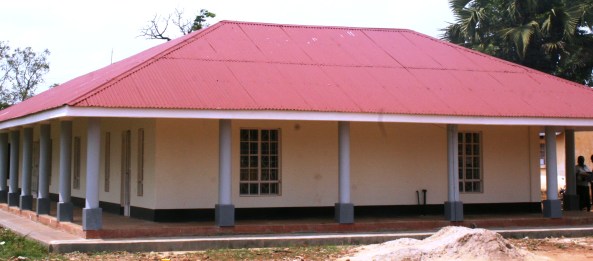
This programme follows a period after civil stage and therefore shall be use to rebuild what was damaged are went stale during the period in general. In purchase of Departmental vehicles, motorcycles and bicycles as means of Field Transport, we shall take this opportunity to establish, Agricultural information and Resource centre which shall include Library, Internet, Digital Projector Cameras and computers. Retooling such as office equipments and other activities shall include; Renovation of building; construction of Permanent Agricultural Show Ground, Water for Production, Laboratory Equipments. Other activities will include. Exchange visits, Study tours (National and International) for both farmers and st
Education and Sports
Education department is one of the core departments in Lira District Local Government. This department is headed by District Education Officer. It is divided into three sectors i.e. Inspectorate headed by district inspector of schools; sports headed by district sports officer and the administration headed by district education officer. All these departments work as a team to achieve a common goal. Lira District Local Government has gone through a lot of turmoil and wars. This has affected the education standard in the district where schools were burnt by the rebels, furniture were vandalised and books were also burnt, children and teachers were abducted by the rebels and some were even killed. This has affected the standard of education in the district.
The objectives of this department are:-
1. To make sure that seventy percent of our teachers are upgraded and trained ;
2. To build at least two (2) twin staff houses in all the 93 government aided primary schools by the year 2015/2016;
3. To build at least one (1) twin staff house in all the government aided secondary schools by the year 2015/2016;
4. To make sure that all the pupils sit on the desks by the year 2015/2016;
5. To make sure that at least there are eight (8) classrooms in all the primary schools in Lira district by the year 2015/2016;
6. To make sure that the district gets more than 1,500 candidates in the first grade by the year 2015/2016;
7. Make sure that the existing classrooms who are in dilapidated conditions are renovated and rehabilitated
The strategies that the department opt to use are:-
1. Lobbying for funding from International Agencies and Donors;
2. Critical planning for all primary, secondary, tertiary and vocational schools;
3. Taking staff houses as a priority followed by classrooms construction and purchase of desks in our schools;
4. Creating competition in our schools;
5. Advising schools to open gardens for learners to grow their own foods in order to improve nutrition in schools
Overall Goal
To ensure that the district utilizes her national, human and financial resources to positively change the socio-economic live of the population in a sustainable way hence contributing towards poverty eradication
Education department has got seven (8) staff at district level i.e. District Education Officer; District Inspector of Schools; Caretaker Senior Education Officer; two (2) Inspector of schools; Caretaker District Sports Officer; Office Typist; Driver and Office Attendant. The enrolment is 40,933 for boys and 39,910 for girls totalling to 80,843 learners/pupils. The staffing level is 996 male teachers and 494 female teachers totalling to 1,490 teachers. The teachers: pupils’ ratio is 1 to 54. HIV/AIDS is a big challenge in the Education sector where the majority teachers and pupils are positive; this has affected the performance in schools.
Development Challenges/Issues
The status of the performance of the District in implementing programmes and projects during the past five (5) years is affected by:
– Inadequate funding from the central government;
– Wars and insecurity caused by rebels and cattle rustling. This has affected the projects in the district;
– Inadequate manpower to monitor and supervise the projects ;
– Funds not provided for monitoring, example PRDP which is supposed to be monitored from the centre.
Gender
Gender differences and inequalities in the Lango Sub-region have resulted in great inequality between men and women with respect to access to education at all levels. From time immemorial men are decision makers, and opportunities for education are given to boys. The girls are for marriage. Evidence of this can still be seen in (a) number of female teachers who constitute only about 30% of Primary school teachers (b) very large gender gap in secondary schools (68.3%) boys against (31.7%) girls who join secondary after primary education (c) high dropout rate for girls at 27.4% against the boys at 19%. The results of these are that there are no role models in rural areas for the young girls to emulate
Maintenance of Department Assets
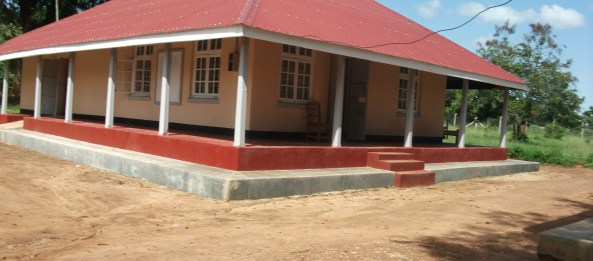
Many school buildings and structures are in a poor state. Some were destroyed during the insurgency, while others were abandoned and eaten by termites. Heavy storms, too frequently destroy many classrooms across the district. So far, community participation in maintenance has been lacking. It’s therefore necessary that a policy be designed for maintenance of all facilities and equipments at both district and school levels.
Planning
Planning can be defined as a continuous process which involves prioritisation and taking decisions on choices about alternative ways of using available resources with the aim of achieving particular goals at sometime in the future.
Planning involves key elements of:
– Deciding, prioritising and choosing
– Allocation of resources
– Defining goals and objectives
– Focusing on the future
When planning we need to address the question of who, where, what, when and how. This District Development Plan is a socio-economic plan which has used a bottom-up participatory approach in planning right from village (LCI) level to district level. Using Harmonised Participatory Planning Guide (HPPG).
Staffing
The unit has the following staff, District Planner, Statistician, Secretary and Driver.
The staffing level is grossly inadequate and not commensurate with the ever increasing workload.
Planning organs
The following organs are responsible for planning in the district:
– The District Council is the planning authority as provided by article 36(1) of the Local Government Act of 1997 and as amended in 2001. The district council formulates policies upon which planning hinges.
– The technical organ of the planning authority is the District Technical Planning Committee which is chaired by the CAO with Heads of Departments as members and co-opted technocrats. Sectoral committees play a crucial role to formulate sectoral plans with their Heads of Departments and technocrats. The planning unit serves as the secretariat to the planning authority.
– The sectoral committees fine-tune council sectoral policies.
– Sub-counties have the sub-county councils as the planning authority assisted by technical planning committees chaired by the Sub-county Chiefs with the technocrats in the sub-county as members. At parish level, Parish Development Committees, which have been formed in all the parishes of Lira, are the planning organ there, giving support to LC-II councils. They initiate plans in consultation with all stakeholders in the parish, formulate it and submit it to parish council for approval.
The LC participates in the parish planning process.
Planning process
The planning process starts at the village level whose proposals/priorities are integrated in the parish plan. The parish plan is then submitted to the sub-county council to incorporate it in their sub-county plan. The sub-county in turn submits their plan to the district for incorporation into the District Development Plan for District Council approval.
The planning processes at parish, sub-county and district levels are interlinked such that each one fits into the other. Participatory planning is long and tedious, but brings out the best and most realistic plan. However, it should be noted that the planning organs in the district lack skills in planning especially at the lower local government/lower local councils i.e. sub-counties and parishes. See for more details chapter I.
Monitoring and evaluation
Monitoring and evaluation has always not been done in time due to delay in release of funds hence late award of contracts. This makes the periodic performance review rather difficult and ineffective. We hope this will be history when the funds are timely released.
POCC Analysis
Potential
– The sub-sector has well qualified and experienced staff
– Planning is an on going process
– Harmonised participatory planning guide has been widely distributed
– Funds available for planning
Opportunities
– The decentralised government structures are in place right from village to district level
– Harmonised participatory planning guide (HPPG) in place
– Positive attitude and perceptions
– National planning authority available
Challenges
– There is weak linkage between district and National Planning Authority
– Inadequate staffing
– Disaggregated planning data at parishes and villages are inadequate
– Inadequate financial resources
– Enforcement of decisions of planning nature is weak
– Monitoring and evaluation is not done in time due to late release of funds.
Constraints
– Diminishing, mentoring and logistical support from population secretariat
– Inadequate funds in the district, limiting the scope of the sub-sectors operations
– Still high negative response by the population to reproductive issues e.g. family planning
– Consideration of the sub-sectors priorities as non-PEAP areas
Finance
The Department of Finance is charged with the overall financial planning and management of the district council. The main functions are:
– Prepare annual revenue and expenditure estimates
– Control expenditures on votes
– Ensure prompt collection of revenue and remission to accounts under the proper sectoral programmes and items
– Conduct frequent checks on revenue collection and expenditure
– Maintain approved accounting system and prepare annual accounts for audit purposes and financial statements and returns as required by the Local Government Act and Financial and Accounting Regulations and any other special reports.
The finance department handles the following categories of finances:
– Local revenue- This comprises Property taxes, User charges, Departmental revenue and miscellaneous sources.
– Central Government transfers – Conditional grants, Unconditional Grants and Equalization Grants
– Donor and NGO funds – generally grants and donations from donors and NGOs., CBOs
Revenue issues
The district still has a poor revenue base as it has not yet recovered from the destruction from the social economic infrastructure which caused by persistent insecurity in the district for over twenty years. However with the restoration of security in the district production is improving and revenue performance shall gradually improved. Besides the above scenario there remain a number of constraints to revenue mobilization and collection indicated below which need to be addressed. However, this effort is being hampered by natural calamities such as draught and hailstorms.
1. General constraints to revenue mobilisation
a) Reduction of taxpayers and the taxable income
• Negative political statements/pronouncement at both Central and Local Government levels.
• Inadequate capacity to carry out the registration process effectively
• Creation of new districts i.e. Otuke and Alebtong Districts
b) Enumeration
• Lack of awareness among tax payers
• Under declaration of taxable income by tax payers
• Inadequate information on taxable income
• Mobility of taxpayers mainly due to security, social and economic reasons
• Lack of basic facilitation e.g. transports allowances and incentives.
c) Assessment
• Poor turn up for assessment
• Poor methods of imputing the value of taxable property
• Inadequate audit operations which do not cover all sub-counties on a regular basis due to lack of funds.
d) Collection and enforcement
• Negative attitude and resentment against tax payment
• Taxpayers tend to pay only under threat at the last moment
• Failure to link tax payment to the benefits the tax payers receives
• Intimidation of taxpayers by some politicians
1. Special Constraints
a) Market fees/charges
• Lack of land titles for revenue sites e.g. markets, bus//taxi stages etc
• Underdevelopment of markets as almost all of them are not fenced, have no commodity stalls and lack sanitary facilities
• Interference in the tendering process and revenue collection by some politicians
• Reserve rates are not properly calculated, monitored and revised regularly
• Untimely procurement of revenue collection stationery
b) Trading licences/permits
• Obsolete laws on trade
• Ignorance of trade laws
• Weak enforcement of business laws.
d) Property rates
• Lack of valuers to carry out valuation of property
• Lack of funds for valuation
• Public resentment to pay the tax
e) Department revenue
This is mainly revenue collected in respect of development on land by the Land and Surveys office and the Forestry sector. The main constraints are:-
• Lack of capacity to develop forest resources and collect revenue from them.
• Introduction of freehold land tenure in all rural areas except gazetted trading/urban centres.
The district budget trend on local revenue has been that most of the time the revenue has been used for recurrent expenditure. Every effort is being made to address capital expenditure areas especially roads, production, schools, small scale micro enterprises
POCC Analysis
Below is a presentation of the POCC analysis result for the finance department, and planning unit. It is important to have this analysis in order to focus the issues realised in the departmental strategies, objectives and activities.
Potentials
– Key posts in the department are filled
– Final accounts have been produced to date
– Steady increase in central government transfers
– Most staff are pursuing professional courses (CPA, ATC) under the Ministry of Finance.
– Many programmes are piloted in Lira which bring finances to the district (MTBF) “Administrative Network Project”, IFMS (Integrated Financial Management System) , etc
Constraints
– Inadequate office space at the District head office for Finance and Planning
– Narrow revenue base
– Accounts are still being prepared manually at the sub-counties
– Pilot projects which are terminated without proper evaluation of lessons learnt
– Lack of transport facilities at both the District head office and sub-counties
– Low budget ceilings for planned activities due to inadequate funds.
Opportunities
– IFMS is being piloted in the district for strengthening financial management
– Electronic Fund Transfer (ETF) has been rolled out to the district
– Flexibility in co-funding using even equalisation grant
– FDS gives more autonomy and flexible planning and managing of local government priorities
– Strengthening links with NGOs shall provide a wider range of opportunities
– Ministry of Finance is sponsoring professional courses like CPA/ATC
Challenges
– Creation of new districts namely Otuke and Alebtong has reduced the districts revenue base.
– Demand by donors for co-funding may over stretch the local revenue
– Inadequate funding of capacity building may leave the local governments over stretched in handling development initiatives
– Inadequacy of the 20% provision of local revenue for council threatens implementation of other activities
– Short falls of releases of central government transfer
– Shortfalls in local revenue collection
– Many court cases are against the district.
– Government intention to stop funding graduated tax compensation
Administration
The head of the civil service and accounting officer of the District Local Government is the Chief Administrative Officer (CAO) immediately assisted by the Deputy Chief Administrative Officer (D/CAO).
The Assistant CAOs are in charge of counties. At the sub-county level, the administration is headed by the sub-county chief (Senior Assistant Secretary) who is the chief executive there and accounting officer. Immediately below the Sub-county Chief are the parish chiefs and several support extension workers. The Principal Personnel Officer takes charge of the personnel unit, while Information and Internal Audit are headed by District Information Officer and Principal Internal Auditor respectively.
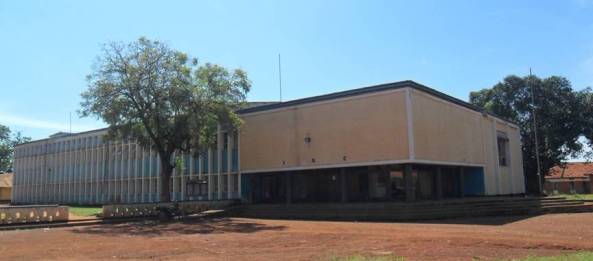
At the District and sub-county levels, there are built offices for discharging the administrative functions. At the parish levels however, the Parish Chiefs discharge administrative functions from the confines of their own homes. It would be appropriate to implement the planned construction of parish office blocks or in the event of availability of funds to rent (semi) permanent buildings for offices.
The Management Services Department is a core department responsible primarily for the promotion of good governance and effective and efficient administration at all levels within the District. This is basically done through a coherent coordination mechanism of all the activities of the different departments and LLGs. Thus, the Department endeavours to maintain an open and effective channel of communication between the various departments, the LLGs, development partners, the Centre and the District leadership. It equally steers and ensures that there is adherence to sound fiscal and managerial policies, regulations, laws and guidelines for proper management in a bid to realize value for money for all funded activities. Further checks on technical staff to find out where they are meeting their targets and commitments as agreed in the client charter of 2009/10.
The Department has similarly within the last couple of years been responsible for the coordination of disaster preparedness and management activities. It is also the Department’s role to ensure that the capacities of both the elected (political) and appointed (technical officers) are built for effective performance and high quality productivity
The management services department basically directs controls, coordinates and guides the operations of the District Local Government and it comprises of four key sections namely: Administration, Information, Human Resources, and Internal Audit.
Its major role is to ensure the effective and efficient delivery of social services through the mechanism of good governance and the coordination of the activities of the departments, LLGs and NGOs.
This is normally done through regular monitoring and mentoring, monthly departmental and Technical planning committee meetings, monthly meetings with NGOs and DDMC, Sectoral and EXCOM committee meetings. Regular reports are also solicited and received from all these relevant stakeholders analysed and action taken on them.
Lira District has one Higher Local Government, one Municipal Local Government (with 4 division LGs) and 9 Sub-county Local Governments. There are 1 County Administrative units, 103 parish administrative units, 20 wards administrative units, 1,547 village administrative units and 20 cell administrative units.
Some of the lower administrative units especially the parishes are a bit too big for effective administration in terms of real size and population. Consequently there is need to sub-divide them even after the division which took place in 2009/10.
Lira District Local Government
LIRA DISTRICT LOCAL GOVERNMENT Lira District is located in Lango sub-region in Northern Uganda and is bordered by the districts of Pader and Otuke in the North and North East, Alebtong in the East, Dokolo in the South and Apac in the West. Physically, the district lies between: Latitudes 1o 21’N, 2o 42”N Longitudes 320 51”E, 340 15”E The district covers approximately a total area 1326 km2 of which 1286.22 km2 is land area.It is one of the Districts that suffered the wrath of the Lords Resistance Army (LRA) insurgency, which resulted into an influx of people from other Districts.
Vision statement To have a democratic prosperous society in a sustainable environment Lira District Mission statement To build and maintain a democratic prosperous society in a sustainable environment. Administrative and Local Government Units The district is composed of the following number of administrative units: Counties = 1 county and 1 Lira Municipal Council Sub-counties = 9 sub counties and 4 Divisions Parishes = 63 parishes and 20 wards in Lira Municipality Villages = 678 villages and 64 cells in Lira Municipality. Geology and Soils The geological formations in the district: – Basement complex (mainly undifferentiated acid gneiss) covering most of the district. Climate The continental climate of the district is modified by the large swamp area surrounding the southern part of the district. The rainfall in the district is bimodal with one peak during April-May and the other in August-October. The average annual rainfall in the district varies between 1200-1600 mm decreasing northwards. The rainfall is mainly convectional and normally comes in the afternoons and evenings. The average minimum and maximum temperatures are 22.50C and 25.50C, respectively. Absolute maximum temperature hardly goes beyond 360C, and absolute minimum hardly falls below 200C. The Equatorial Trough which brings rainfall passes over the district. The South easterly winds which also brings rains to the district passes over Lira. Land and sea breezes are common in the district. Wind run is low (1-4m/sec) during the rainy season and moderate (4-8m/sec) during the dry season. Lira District has one Higher Local Government, one Municipal Local Government (with 4 division LGs) and 9 Sub-county Local Governments. There are 1 County Administrative units, 63 parish administrative units, 20 wards administrative units, 678 village administrative units and 64 cell administrative units.
- District creation 1974
- Distance from Kampala is 375kms via Karuma- Kamdini .
- Total area 1,326 km²
- Land area 1154 km²
- Area of water bodies
- Population Density 314 persons per km²
- Average household size 4.7
- of households 108,691 with most homes being headed by men though there are women headed households and child headed households as well.
- Number of Constituencies 03 (Erute North, Eute South and Lira Municipalities)
- of sub counties 13
- of Municipalities 01
- of parishes 89
- of villages 751
Lira District Area Size in Km2 by Sub-County
| No. | Sub-county | Area size (km2) | No. | Sub-county | Area size (km2) |
| 1 | Amach | 215.3 | Erute County Total | 1,290 | |
| 2 | Agali | 104.7 | 10 | Adyel Division | 12.6 |
| 3 | Adekokwok | 67.2 | 11 | Ojwina Division | 13.1 |
| 4 | Ngetta | 65.8 | 12 | Lira Central Division | 8.1 |
| 5 | Ogur | 145.9 | 13 | Railways Division | 2.2 |
| 6 | Agweng | 127.1 | Municipality | 36 | |
| 7 | Lira | 85 | Total | 1326 | |
| 8 | Barr | 293 | |||
| 9 | Aromo | 186 |
Population and Demographic Characteristics
The estimated population of the District, as of 2011 was 389,300. As of now, it is projected to be 416.100with an annual population growth rate of 3.6%.
The population figures alongside key demographic indicators for Lira District. Demography
- Population projection (2013) 416,100
- of Males 202,900
- of Females 213,200
- Women (15-49 years) 90,650 (22.5%)
- Population (6-12 yrs) 84,310 (20.9%)
- Adolescents (10 -24) years 131,100 (32.5%)
- Youth (18-30 years) 90,400 (22.4%)
- Children (0-18 years) 239,500 (59.4%)
- Children 0-5 years 100,620 (25%)
- Older persons (60+ years) 8,280 (2.1%)
- Ethnic grouping Langi
- Commonly spoken language Lango
- Population below poverty line 50%
Annual Population growth rate 3.6%
3 District Leadership
The District Council
This is the supreme organ of the District with Executive and Legislative Powers.
The District council comprises of 27 members with 15 males and 12 females.
The District Council is presided over by the District speaker and sits at least every two
months
The District Executive Committee
This is the organ of the District Council that manages the day today political matters of
the District on behalf of the District Council with Executive Powers
Standing Committees
These monitor the performance of the District Executive Committee and Technical
Departments on behalf of the District Council. They are 5 and include
- Finance and Administration
- Education and Health
- Production and Natural Resources
- Works and Technical Service
- Community Based Services
Names and Titles of the District Leadership
| N0. | Designation | Name |
| 1 | District Chairperson and Secretary for Finance. | Hon. Alex Oremo Alot |
| 2 | District Vice Chairperson and Secretary for Health and Education. | Hon. Andrew Ogwang Oryang |
| 3 | District Speaker | Hon. Martin Ocen Odyek |
| 4 | Deputy Speaker | Hon. Betty Akullu |
| 5 | District Executive Committee |
|
|
Chairperson Standing Committee |
||||
| N0. | Parliamentary Representation | |||
| 1 | The District is represented by 4 members of Parliament | |||
| Members of Parliament |
|
|||
Representative of the Office of the President
| 01 | Resident District Commissioner | Mr. Odongo George | ||
| 02 | Deputy Resident Commissioner | Mr. Lutumoi | ||
District Technical Leadership
Chief Administrative Officer
The Chief Administrative Officer is Mr. Solomon Ssonko and is the head of District Public
Service. The CAO provides Strategic technical leadership, developing, reviewing, monitoring and implementation of policies plans budgets, and programmers of Central government and District
| council. He is assisted by a number of technical officers; | |
The CAO supervises the following heads of Departments. |
|
|
|
| State of Service Delivery in Lira District Local Government
The above heads of departments are responsible for Service Delivery in their departments being supervised by CAO. Basic public services such as education, health, roads and agricultural advisory are essential to the local and national economy. The quality of these services provided to citizens is the ultimate measure of performance of government. Service Delivery Indicators in Lira District (2012/13) Primary Education Services Education
|
|
 Lira District